Summary:
- Liberia’s Inter-Religious Council, the umbrella body representing the country’s major Christian and Muslim institutions, is urging lawmakers to pass a stalled health bill that would expand access to abortion in certain cases, breaking with years of opposition to the measure by religious leaders.
- Supporters say the bill is needed to reduce deaths and injuries from unsafe abortions and make it easier for doctors to save women facing life-threatening pregnancy complications.
- The Catholic Bishops’ Conference, the official body representing Catholic bishops nationwide, has rejected the Council’s position, setting up a renewed battle in the Senate over one of Liberia’s most controversial health laws.
In a major boost to efforts to pass a health bill that would expand access to abortion in Liberia, the Inter-Religious Council, the umbrella body representing the country’s major Christian and Muslim institutions, has called on lawmakers to pass the legislation, breaking with years of religious opposition that has helped stall the bill in the Senate.
“The health, safety, and dignity of individuals within families constitute a core component of family strengthening,” the Council said in a statement released last week.
The Council’s intervention is significant because religious opposition has been one of the strongest barriers to passage of the Public Health Bill, a sweeping reform measure intended to modernize Liberia’s decades-old public health system. While the bill contains provisions on disease surveillance, emergency preparedness, vaccinations, environmental health, and occupational safety, public debate has focused on provisions that would expand access to abortion under defined circumstances.
Supporters of the bill were surprised and grateful for the Council’s change of heart.
“That’s what I wanted,” said Joseph Somwarbi, a pharmacist and former legislator who said he lost his seat because he supported the bill. “And if people have understood that and find it necessary that our women and girl children should live, then there’s no better time than now.”
They said Council support could be what is needed to get it passed.
“Every time we delay this bill, women remain at risk, especially women in rural Liberia,” said Amelia Siaffa, acting executive director of Sister Aid Liberia, a women’s rights organization that advocates for sexual and reproductive health and gender equality.
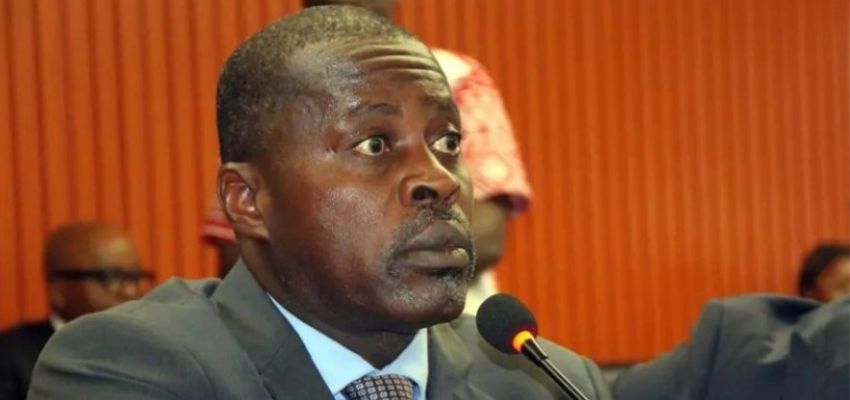
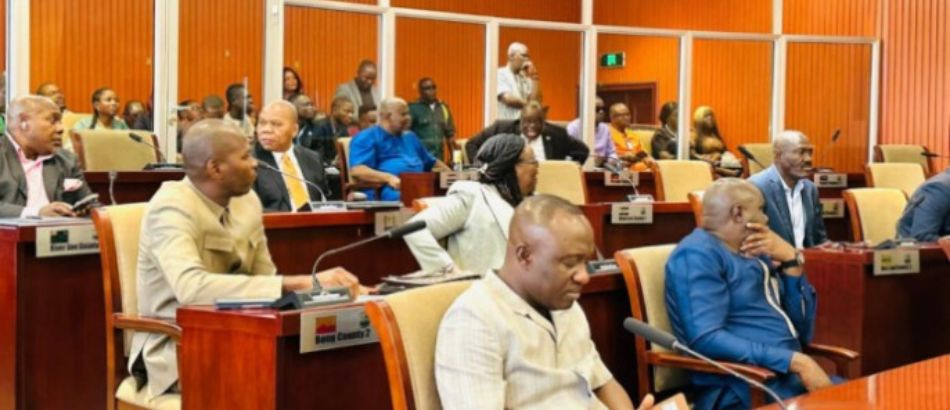
Senator Amara Konneh of Gbarpolu in chats with Dabah Varpilah, Senate Health Committee chair, during a recent Senate session.
The bill has been stalled in the Senate since 2022 without enough votes to pass it, despite repeated efforts by health advocates who argued it would reduce the country’s exceptionally high maternal and infant deaths and injuries linked to life-threatening pregnancy complications and unsafe abortions.
But the Council’s position immediately drew opposition from one of Liberia’s most influential religious groups.
In a statement, the Catholic Bishops’ Conference of Liberia, the official body representing Catholic bishops nationwide, said it was “not in agreement” with the Council’s endorsement of the bill and reaffirmed its opposition to abortion provisions contained in the legislation.
Citing what they said were Biblical teachings and Catholic doctrine that human life begins at conception, the Conference said they “unequivocally reject the concept of justified abortion” contained in the proposed law.
The Bishop’s statement was signed by Archbishop Gabriel Blamo Jubwe of Monrovia, Bishop Anthony Borwah of Gbarnga, and Bishop Andrew Jagaye Karnley of Cape Palmas.
The dispute emerged after the Inter-Religious Council publicly distanced itself from the “Strengthening Families Conference,” an annual regional gathering led by the Church of Jesus Christ of Latter-day Saints, a 19th-century American church whose beliefs diverge from mainstream Christian denominations on key doctrines and opposes elected abortion. The Church, whose followers are widely known as “Mormons”, has been growing rapidly in Liberia in recent years thanks to aggressive recruitment activities.
The Council said it had not been consulted about the conference and criticized what it described as approaches that fail to adequately address challenges affecting Liberian families, including maternal mortality, teenage pregnancy, gender-based violence, poverty, and limited access to healthcare and education.
Conference organizers, the Church of Jesus Christ of Latter-day Saints, did not respond to emails and follow-ups until the deadline.Supporters of the Public Health Bill said the Council’s intervention represents a potentially important political breakthrough. Religious opposition played a major role in slowing the bill’s progress before the 2023 elections, when some lawmakers worried that support for the legislation could hurt their reelection prospects.
Leadership of the inter-religious council of Liberia, a moral voice of all religious groups in the country, during the release of its position statement calling for the passage of the public health bill.
Under Liberia’s current law, abortion is permitted only in limited circumstances, including rape, incest, serious fetal abnormalities, or when a pregnancy threatens a woman’s health. Even then, obtaining approval can be difficult because the law requires authorization from two doctors – a significant obstacle in many rural areas where doctors are scarce. Advocates say many of Liberia’s poor young women do not know they are even pregnant until far into the pregnancy, and they would not have the money or knowledge needed to approach doctors for an abortion.
The proposed legislation would allow abortion up to 14 weeks of pregnancy if performed by a doctor.
Supporters argue that the amendment is not intended to create abortion on demand but to reduce deaths and injuries caused by unsafe abortions and allow doctors to respond more quickly when pregnancies that have gone wrong threaten a woman’s life.
Liberia faces a serious maternal health crisis. World Bank data shows 628 maternal deaths per 100,000 live births, one of the highest rates in the world. A 2021 study by Liberia’s Ministry of Health and the Clinton Health Access Initiative found that more than 14,500 women sought treatment for abortion-related complications in a single year. One in 10 suffer die of severe injuries.
For D., a young Liberian woman who still lives with chronic pain after seeking help from an untrained provider as a teenager, those statistics are deeply personal.
She was 15, pregnant, and terrified her parents would find out.
“The man put me on a long bed,” she recalled in an interview earlier this year. (FrontPage Africa/New Narratives is using only her initial to protect her from stigma.) “Then he had plenty of iron in a pan. Then he used that. He put it inside me.”
Doctors later told her the procedure had damaged her body. Today, she fears she may never have children.
Advocates say stories like hers explain why reform has become such an urgent issue.Somwarbi also argued that the current law places women facing life-threatening pregnancies at unnecessary risk.
D., a young woman who sought a dangerous alternative to abort her pregnancy out of fear of being punished by her parents. She did not want to live with pain and fear; she may not have a child of her own as a result of the procedure.
Somwarbi said the amendment would allow doctors to act more quickly in emergencies, rather than forcing patients to navigate approval processes that can delay care. He argued that requirements for multiple doctor approvals are often impossible to meet in rural Liberia and contribute to unsafe abortions.
He said this issue is so important that he was willing to lose his seat to defend the bill.
“People were afraid simply because they felt that it was going to hinder their election, for which I am a victim,” said Somwarbi. “For me, I felt that the life of another person is more important than elections.”
This story was produced in collaboration with New Narratives as part of the Investigating Liberia project. Funding was provided by a private donor and the Swedish International Development Cooperation Agency. The donors had no say in the story’s content.
Source credit: By Joyclyn Wea, gender correspondent with New Narratives/ FPA