
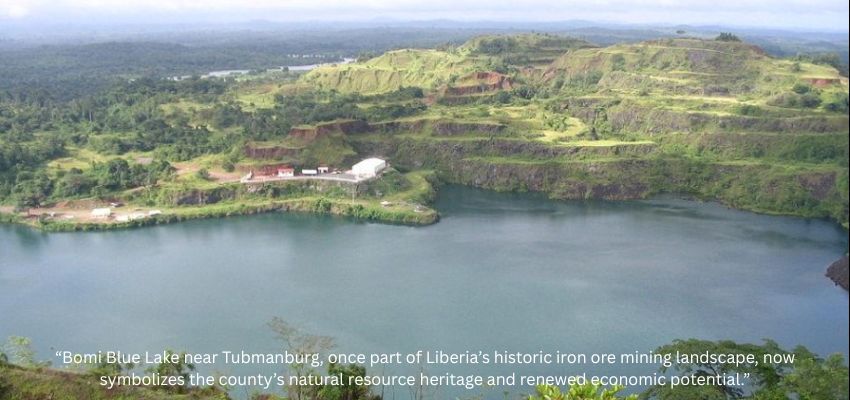
Tubmanburg, Bomi County , Bomi County remains one of Liberia’s most historically significant resource hubs, with economic potential built on decades of mining, agriculture, and natural resource development.
Known as the birthplace of Liberia’s commercial iron ore industry, Bomi played a major role in shaping the country’s early mining economy. Iron ore extraction began in the 1950s through the Liberia Mining Company, establishing Bomi Hills as a symbol of Liberia’s entry into large-scale mineral production.
Although mining activities have declined from their historic peak, the county continues to hold valuable natural resources, including iron ore, gold, diamonds, timber, stone, and sand. These resources continue to present opportunities for renewed investment, local enterprise development, and future industrial growth.
Agriculture remains the foundation of livelihoods across Bomi, supporting a large portion of the county’s workforce through farming and related activities. The county’s fertile land supports rice, cassava, vegetables, oil palm, and other crops, while the presence of the Guthrie Plantation, one of Liberia’s largest rubber plantations, highlights Bomi’s continued importance in the national rubber sector.
Located close to Monrovia and major markets, Bomi also benefits from strategic access to trade routes, creating opportunities for agricultural processing, commerce, and private sector expansion.
Despite setbacks caused by years of conflict and economic disruption, Bomi’s rivers, hills, mineral deposits, agricultural lands, and human resources provide a strong foundation for recovery and sustainable development.
Development observers believe that improved infrastructure, responsible resource management, and investment in value-added industries could position Bomi as a stronger contributor to Liberia’s long-term economic transformation.
LiberiaData News Desk