EBOLA Hotline Activated

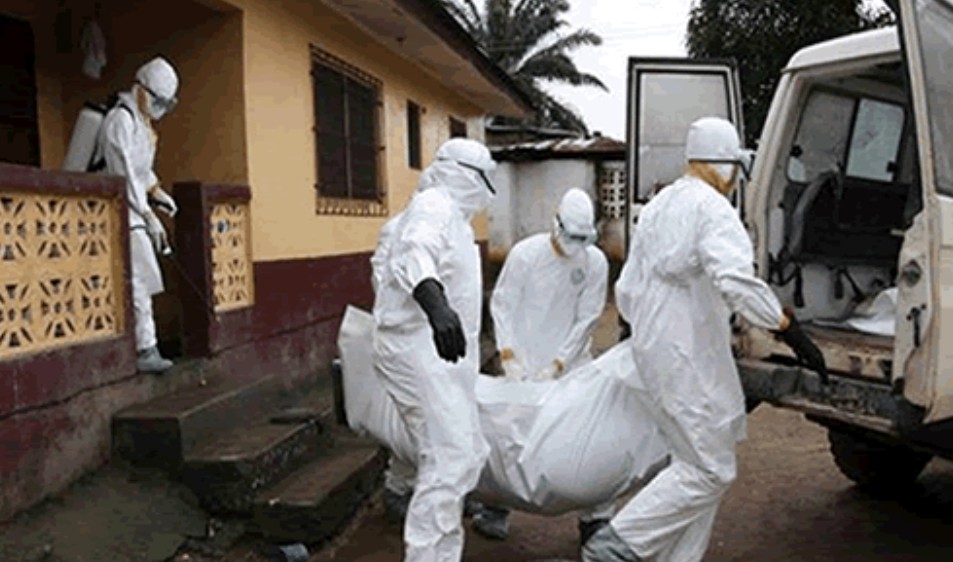
Monrovia, May 29, 2026 – In an effort to bolster nationwide surveillance and prevention measures, the Ministry of Health and the National Public Health Institute of Liberia (NPHIL) have reactivated the national emergency hotline 4455. Authorities are urging citizens to promptly report all suspected cases or symptoms suggestive of Ebola.

he emergency hotline forms part of the Ebola Reporting System (ERS), established during the 2014–2016 West African Ebola outbreak to strengthen real-time reporting, enhance communication with citizens, and facilitate coordination among health authorities and response partners. The ERS was launched as a surveillance and reporting platform, enabling quicker detection of Ebola cases and more effective use of data collected from hotline calls to control the spread of the disease.

During the outbreak, Liberia faced major challenges, including delayed reporting, weak disease surveillance, limited laboratory capacity, and gaps in communication between county health teams and the national government.

Although the government reports there are currently no active Ebola cases in the country, officials maintain that health authorities are now better prepared to detect and respond to any outbreak should one emerge.

Making the disclosure at the Ministry of Information’s regular press briefing on Thursday, Deputy Information Minister Daniel announced that the national emergency hotline 4455 has been reactivated. He urged citizens to use the hotline to report any suspected Ebola symptoms or cases.
“While there is no active case in Liberia, the Ministry of Health and the National Public Health Institute have proactively strengthened surveillance, preparedness, and rapid response systems nationwide to ensure any potential outbreak can be swiftly contained. We have activated infrastructure never before available, and the public remains a crucial partner in this process,” he stated.
As a result, he said, the Ministry of Health and NPHIL are calling on the public to report any suspected cases or symptoms resembling Ebola by calling the hotline 4455.


By Kruah Thompson / The New Dawn Liberia
American Businesses in Liberia Unite to Form New Association

A new chapter in Liberia–United States commercial relations began on Wednesday, May 20, 2026, when more than 40 American businesses operating in Liberia gathered at the Multi-Purpose Room of the United States Embassy in Monrovia for the inaugural meeting of the U.S. Business Dialogue.

The landmark gathering culminated in the decision to establish the American Business Association in Liberia (ABAIL), a body intended to strengthen cooperation among American companies while supporting Liberia’s economic growth and investment climate.

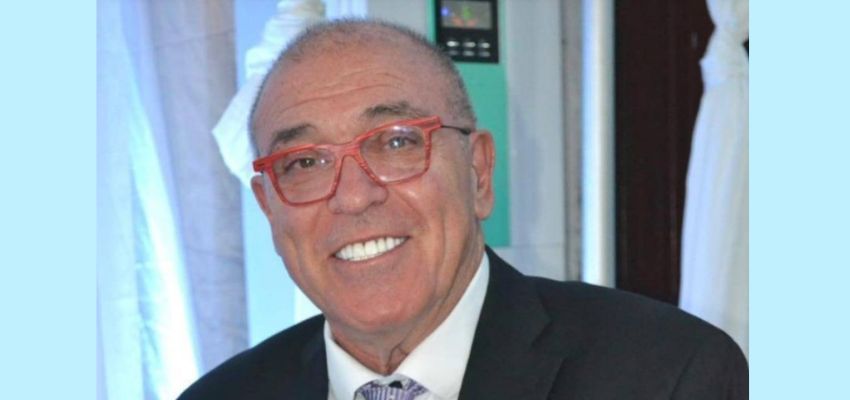
In a unanimous decision welcomed by participants, Abraham Avi Zaidenberg was selected as interim head of the proposed association and tasked with leading the process toward the formal formation and registration of ABAIL as a legal entity in Liberia.

Business leaders at the meeting described Mr. Zaidenberg as a seasoned and respected figure within Liberia’s business community whose decades of experience uniquely position him to guide the new organization during its formative stage. Having lived and conducted business in Liberia for more than 30 years, Mr. Zaidenberg previously played a leading role in representing American business interests in the country prior to the Liberian civil conflict.

Participants praised his extensive institutional knowledge, longstanding commitment to Liberia, and ability to foster cooperation among diverse stakeholders.

According to discussions at the meeting, the proposed association will focus on promoting new American investments in Liberia, encouraging the free flow of information and cooperation among American companies, and strengthening commercial and technical collaboration with the support of the United States Embassy in Liberia.

ABAIL also aims to work closely with the Liberia Chamber of Commerce and the Government of Liberia in efforts to help build a stronger and more resilient Liberian economy through increased American private-sector participation.

In remarks following his selection, Mr. Zaidenberg expressed appreciation for the confidence reposed in him and pledged to work diligently to unite American businesses operating in Liberia.

He emphasized the importance of collaboration, investment, and constructive engagement with Liberian institutions, noting that American businesses can play a meaningful role in supporting economic growth, job creation, and private-sector development in the country.

Observers at the meeting described the formation of ABAIL as a timely initiative that could deepen economic ties between Liberia and the United States while creating a stronger platform for advocacy, partnership, and responsible investment.

The establishment of the association is also expected to improve coordination among American companies and provide a structured avenue for engagement on issues affecting trade, commerce, and investment in Liberia.


Source credit: frontpage Africa

“Liberia Cannot Afford Another Ebola Nightmare” — House Summons Health Authorities Over DRC Outbreak Fears

The House of Representatives has summoned the heads of the National Public Health Institute of Liberia and the Ministry of Health of Liberia to appear before plenary on Tuesday following mounting concerns over Liberia’s preparedness for the recent Ebola outbreak in the Democratic Republic of Congo. The action follows a formal communication from Montserrado County District 16 Representative Dixon W. Seboe addressed to House Speaker Richard Nagbe Koon.

In the communication, Representative Seboe urged the House leadership to immediately engage national health authorities on measures being taken to prevent a possible resurgence of Ebola in Liberia. “I am writing to formally request the appearance of the heads of the National Public Health Institution of Liberia and the Minister of Health before the full plenary of the House of Representatives to discuss Liberia’s preparedness and response strategies regarding the recent Ebola outbreak in the Democratic Republic of Congo,” Seboe wrote.

The lawmaker emphasized that the outbreak, which has already drawn international attention, presents serious risks to Liberia because of regional movement and the country’s past experience with the deadly virus. “As we are aware, the ongoing situation poses a significant risk of further spread given Liberia’s proximity to the affected regions, alongside our historical experiences with Ebola outbreaks,” he stated.

Seboe reminded lawmakers of the devastating impact the Ebola crisis had on Liberia between 2014 and 2016, noting that the country suffered massive loss of life and enormous pressure on its healthcare system. He warned that Liberia cannot afford to repeat the mistakes of the past by waiting until the situation worsens before strengthening preventive measures.

Referencing concerns raised by the World Health Organization, the Montserrado County lawmaker stressed the need for heightened vigilance surrounding the Bundibugyo strain of the virus. “The WHO’s warnings concerning the Bundibugyo virus and its potential escalation necessitate our readiness to respond effectively,” he cautioned.

He further pointed to growing concerns surrounding high population mobility and the urban nature of affected areas in the Democratic Republic of Congo. According to him, those factors significantly increase the possibility of cross-border transmission if neighboring countries fail to intensify surveillance and preparedness efforts.

“In light of the reported cases and the risk factor identified by the WHO, including high population mobility and the urban nature of the affected areas, it is critical that we ascertain the measures NPHIL and the Ministry of Health have in place to prevent resurgence of Ebola in our community,” Seboe added.

The lawmaker also stressed the importance of understanding the current state of Liberia’s healthcare preparedness, including surveillance systems, emergency response capacity, and public awareness initiatives. “Understanding the current status of our public health infrastructure, surveillance systems, and community awareness campaigns will be vital for ensuring the safety and health of our citizens,” he stated.

Representative Seboe concluded by calling for urgent legislative action on the matter, urging Speaker Koon to ensure that the hearing is held without delay. “I kindly urge that we schedule a hearing at the earliest convenience where our health authorities can provide updates and answer pertinent questions regarding Liberia’s readiness to manage potential risks arising from the outbreak in the DRC,” he noted.


Source credit: Z. Benjamin Keibah / knewsonline.com

UNCDF Funds MAjor Decentralization and Capacity-Building Workshop for Local Leaders in Liberia

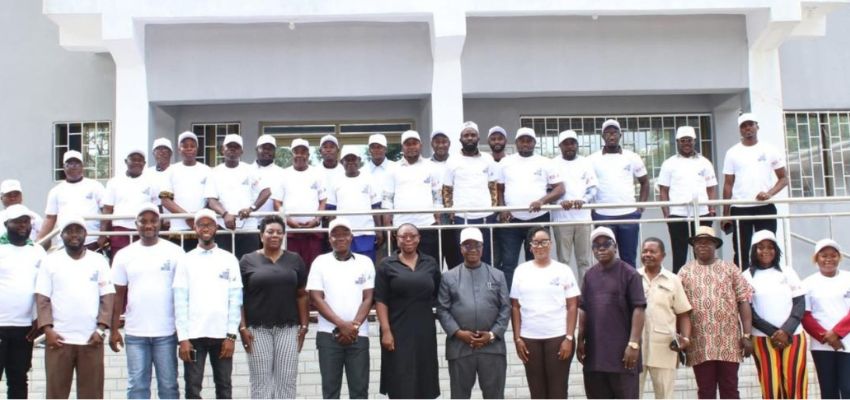
In a major push to advance Liberia’s decentralization and local governance agenda, the newly established Ministry of Local Government (MLG) today convened a comprehensive Knowledge Exchange, Share Lessons, and Capacity‑Building Workshop.

Organized and fully funded by the United Nations Capital Development Fund (UNCDF), the high‑level event represents a critical step in equipping sub‑national leaders with the tools and expertise required to manage local resources and build resilient county frameworks. The workshop brought together a robust contingent of county leadership, including the Superintendent of Lofa County, County Development Officers, and County Finance Officers representing Lofa, Nimba, Bong, and Grand Bassa counties. Civil society organizations (CSOs) and cross‑governmental delegations also participated, with representatives from the Environmental Protection Agency (EPA), the Ministry of Finance and Development Planning (MFDP), and the Governance Commission.


Regional Collaboration and Environmental Synergy 

A key highlight of the opening session was a call for cross‑border cooperation within the West African sub‑region. Representing her institution, Ms. Stella Okoh, Deputy Director of the EPA of Ghana, emphasized that local development and environmental preservation are inseparable.

“True capacity building crosses boundaries,” Ms. Okoh remarked, urging enhanced collaboration between Ghana and Liberia to address shared climate vulnerabilities and build sustainable municipal frameworks.


National Commitment to Decentralization 

Speaking on behalf of the Minister of Local Government, Hon. F. Sakila Nyumalin Sr., Deputy Minister Edward K. Mulbah underscored the workshop’s importance to the administration’s development goals. He stressed that local capacity is the bedrock of successful decentralization and reaffirmed the Government of Liberia’s unwavering financial and political support for structural reforms. Deputy Minister Mulbah assured partners that insights gained from the sessions would be translated into actionable policy to strengthen grassroots governance.


UNCDF’s Continued Partnership 

Leading the international development cohort, Ms. Angela Yayra Kwashie, Technical Specialist and Local County Coordinator for UNCDF, expressed pride in partnering with the Liberian government. She highlighted UNCDF’s commitment to fostering structural efficiency, transparent resource management, and localized financial empowerment across participating counties.


Source credit: mlg.gov.lr

Ministry of Local Government Participates in Groundbreaking for Robertsport Hospitality and Tourism Training Center

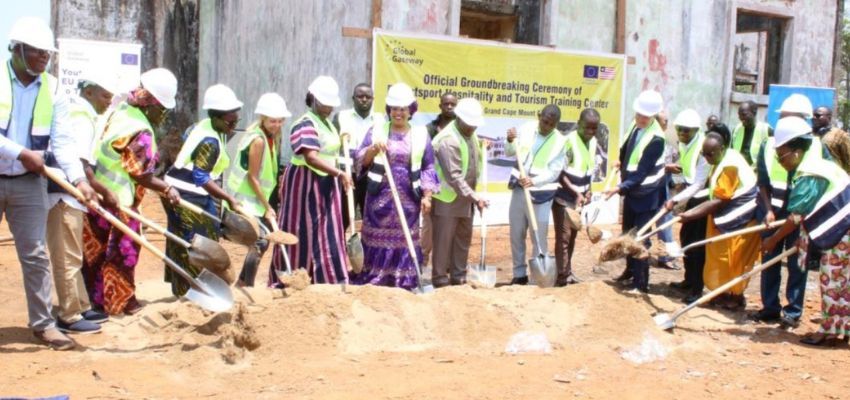
The Ministry of Local Government has joined national and international partners in the official groundbreaking ceremony for the Robertsport Hospitality and Tourism Training Center, a landmark initiative designed to advance skills development and tourism‑driven growth in Liberia. The new Tourism Technical and Vocational Education and Training (TVET) School forms part of the Youth Rising Project, jointly implemented by the Ministry of Youth and Sports and the Ministry of Education, with technical support from the United Nations Industrial Development Organization (UNIDO).

Representing the Minister of Local Government, Hon. F. Sakila Nyumalin Sr., Deputy Minister for Research, Program and Policy, Madam Selena Polson Mappy, described the project as a transformative investment in the future of Grand Cape Mount County and Liberia as a whole. She emphasized that the center is more than just infrastructure, noting that it represents opportunity, empowerment, and inclusive development. The facility is expected to serve as a hub for capacity building, equipping young people and community members with practical skills to thrive in the hospitality and tourism sector. Madam Mappy reaffirmed the Government’s commitment to decentralization and strengthening local governance by ensuring that counties benefit from targeted development initiatives that directly improve livelihoods. She called on residents and stakeholders to take ownership of the project and safeguard it, stressing that its success depends on collective responsibility and community stewardship.


Tourism as a Driver of Growth 

The Robertsport Hospitality and Tourism Training Center is expected to:

  • Boost job creation by preparing youth for careers in hotels, restaurants, and tourism services.
  • Stimulate local economic growth through increased visitor engagement and hospitality investments.
  • Promote Liberia’s cultural heritage by positioning Grand Cape Mount County as a leading tourism destination.
  • Strengthen regional competitiveness by aligning Liberia’s tourism sector with international standards.


Looking Ahead 

As construction begins, the center is envisioned not only as a training facility but also as a catalyst for broader community transformation. By linking education, employment, and tourism, the project will help unlock the county’s potential and contribute to Liberia’s long‑term development goals.

Source credit: mlg.gov.lr

Rep. Rugie Barry Pushes Landmark Disability Rights Bill as Lawmakers Order Fast-Track Review

Montserrado County District #1 Representative Rugie Yatu Barry has introduced a powerful new bill that could legally guarantee inclusion, employment and social protection for one of the country’s most marginalized populations.

During the 10th day sitting of the First Quarter of the 3rd Session on Thursday, February 12, the House of Representatives unanimously mandated its Joint Committees on Health and Judiciary to urgently review the proposed legislation titled “An Act to Provide for the Inclusion, Employment and Support of Persons with Disability within the Republic of Liberia, 2026.”

Presenting the bill to plenary, Rep. Barry painted a grim picture of life for persons with disabilities in Liberia, declaring that their daily suffering is not accidental but the result of long-standing neglect and exclusion.

For far too long, persons with disabilities in Liberia have been treated as invisible citizens,” Rep. Barry told lawmakers. “They are denied education, shut out of employment, and excluded from social services that every Liberian is entitled to. This is not just unfair it is a violation of their fundamental human rights.”

She said the proposed law is designed to move Liberia from sympathy to action, ensuring that persons with disabilities are not only protected but empowered through guaranteed access to jobs, training, and public services.

“This bill is about dignity,” she added. “It is about making sure that no Liberian is condemned to poverty simply because of a physical or mental condition.”

According to the House Press Bureau, the legislation seeks to create a legal framework that compels both government and private institutions to include persons with disabilities in the workforce, while also providing support systems that can lift them out of extreme poverty and social exclusion.

Lawmakers, acknowledging the urgency of the issue, ordered the Joint Committees to complete their review and submit a report within two weeks, a move widely seen as a signal that the House intends to treat the bill as a priority.

This House cannot continue to turn its back on some of the most vulnerable people in our society,” one lawmaker remarked during the session. “If we are serious about equality and justice, then this bill must not gather dust.”

If passed into law, Rep. Barry’s proposal could become one of Liberia’s most far-reaching social justice reforms in years, potentially transforming the lives of thousands of people who have long been pushed to the margins of society.


Source credit: Z. Benjamin Keibah / knewsonline.com

IMF Completes Third ECF Review, Confirms Growth and Stability

The International Monetary Fund (IMF) has officially confirmed that Liberia’s economy expanded by 5.1 percent in 2025, subsequent to the successful completion of discussions under the Third Review of Liberia’s Extended Credit Facility (ECF) Arrangement.

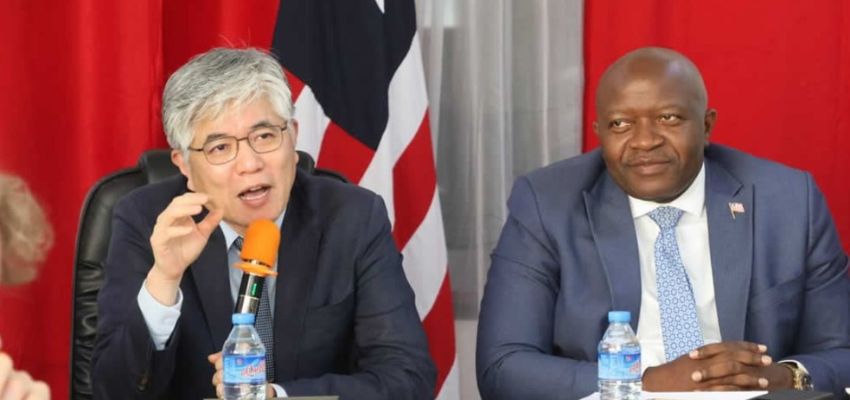
An IMF staff team, led by Mr. Daehaeng Kim, visited Monrovia from January 7 to 20, 2026, and reached a staff-level agreement with the Government of Liberia concerning the third review of the nation’s economic reform program supported by the ECF.

The ECF arrangement, which received approval from the IMF Executive Board on September 25, 2024, provides total access of SDR 155 million (approximately US$210 million) over a 40-month duration.

According to the IMF, macroeconomic stability in Liberia continues to strengthen, supported by robust economic activity, sharply declining inflation, and a stable exchange rate. It reports that program performance since the second review has been relatively strong.

At the conclusion of the mission, Mr. Kim stated:

“Liberia’s economic and financial reforms continue to progress, supported by favorable macroeconomic outcomes. Real GDP growth is estimated at 5.1 percent in 2025, up from 4.0 percent in 2024, driven by strong mining activity and moderate expansion in the agriculture and services sectors. Inflation declined significantly, averaging 4.4 percent in the fourth quarter of 2025, compared to 12.5 percent in the first quarter, while the exchange rate remained broadly stable.”

The IMF mission further commented, “Fiscal performance has strengthened, with the primary fiscal surplus, excluding grants, improving from 1.3 percent of GDP in 2024 to 1.4 percent in 2025, exceeding the program target of 1.1 percent of GDP.”

The IMF emphasizes that steadfast reform implementation will remain essential to consolidating macroeconomic stability, reducing debt vulnerabilities, and strengthening the banking sector. Continued prudent fiscal policies, enhanced domestic revenue mobilization, improved public financial management, and stronger monetary policy effectiveness will be critical to sustaining stability and supporting development priorities.

During the mission, the IMF team engaged in consultations with President Joseph N. Boakai, members of the National Legislature, Minister of Finance and Development Planning Augustine K. Ngafuan, Central Bank of Liberia Executive Governor Henry F. Saamoi, senior government officials, and development partners.

Source credit: mfdp.gov.lr

Ministry of Internal Affairs Renamed Ministry of Local Government as Government Prepares to Implement Amended Local Government Act

In his first State of the Nation Address delivered on January 29, 2024, His Excellency Joseph Nyuma Boakai, Sr., President of the Republic of Liberia, underscored decentralization as a cornerstone of his administration’s ARREST Agenda for Inclusive Development (AAID).

In that address, President Boakai noted that Liberia’s long-standing highly centralized governance system, anchored in Monrovia, had for decades excluded rural communities and left them marginalized. To reverse this trend and effect a paradigm shift, the President committed his administration to the full implementation of the Local Government Act of 2018 and called on the Legislature to establish a dedicated Ministry of Local Government.

Following the address, President Boakai took concrete steps to empower local governance by instructing all relevant Ministries, Agencies, and Commissions (MACs) to devolve approval and signing authorities to their respective representatives at County Service Centers.

In furtherance of this vision to strengthen governance and accelerate national development, His Excellency President Joseph Nyuma Boakai, Sr., in August 2025, requested a change in the name of the Ministry of Internal Affairs to the Ministry of Local Government. This request included an amendment to Chapter 25 (Ministry of Internal Affairs), Title 12 of the Executive Law of 1972, Liberian Codes of Law Revised, to establish in its stead a new Chapter 25 known as the Ministry of Local Government.

The amendment paves the way for the full operationalization of the 2011 National Policy on Decentralization and Local Governance, the Local Government Act of 2018, and the Revenue Sharing Law of 2022. Collectively, these legal instruments devolve specific political, administrative, and fiscal powers and functions from the central government to county and sub-county authorities.

The promulgation of these frameworks imposes expanded mandates and responsibilities on the Ministry, making its renaming necessary. It also requires the adjustment of its core mandates, functions, and organizational structure, as well as the strengthening of its institutional capacity to effectively lead the implementation of decentralization, peacebuilding, and local governance laws, policies, and programs.

Pursuant to President Boakai’s vision, the Executive submitted an Act to amend Chapter 25 of the Executive Law. The amendment was unanimously passed by the House of Representatives, concurred by the Senate, and subsequently printed into handbill, thereby giving it full legal effect.

With this latest development, and in alignment with the President’s vision, the Ministry of Local Government is set to begin the nationwide rollout of the amended Local Government Act and calls for the full cooperation and participation of all concerned stakeholders.

Meanwhile, the Ministry of Local Government extends profound thanks and appreciation to His Excellency President Joseph Nyuma Boakai, Sr., for his visionary leadership and unwavering support. The Ministry also expresses gratitude to the National Legislature and all partners and stakeholders who supported the passage of the amended Act.t


Source credit: mlg.gov.lr

Liberia’s Economy Grew 5.1% in 2025, Driven by Mining Boom

Liberia’s economy expanded by 5.1% in 2025, driven by a strong rebound in mining and continued gains in the services and agriculture. Mining sector growth increased to 17.0% from 2.1% in 2024, providing a significant boost to industrial output. The services sector grew by 4.4%, supported by trade, electricity supply, and transport activity, while agricultural growth eased to 2.6% as price effects faded and rubber output slowed.

Inflationary pressures remained contained, with headline inflation averaging 8.5% in 2025. Food inflation declined sharply from 9.7% year-on-year (y/y) in December 2024 to -1.7% by December 2025, while nonfood inflation moderated from 11.1% (y/y) to 6.6% over the same period.

The Central Bank of Liberia maintained its restrictive policy stance, cautiously easing its policy rate from 17% in January 2025 to 16.25% in December, a measured intervention that reflected the inflation dynamics.

Liberia’s fiscal performance improved considerably in 2025.The overall fiscal deficit narrowed to 1.1% of GDP in 2025 from 2.0% the previous year, driven by growth in domestic revenue and compressed spending. The primary balance swung to a surplus of 0.2% of GDP, compared to a deficit of 1.0% in 2024. Public debt declined from 57.2% of GDP in 2024 to 54.6% in 2025.

On the external side, the current account deficit declined from 8.1% of GDP in 2024 to 6.5% in 2025. Export performance was robust, led by gold and iron ore, however, the gains in exports were offset by rising imports and sizable outflows from services and income. Remittances provided some cushion, helping to contain the overall deficit. Liberia’s external buffers remain limited, with foreign reserves standing at $576 million, an equivalent of approximately 2.0 months of import cover at end-2025.


Source credit: World Bank Country Page

House of Representatives Approves Creation of 14 New Districts, Raising Total Seats to 87

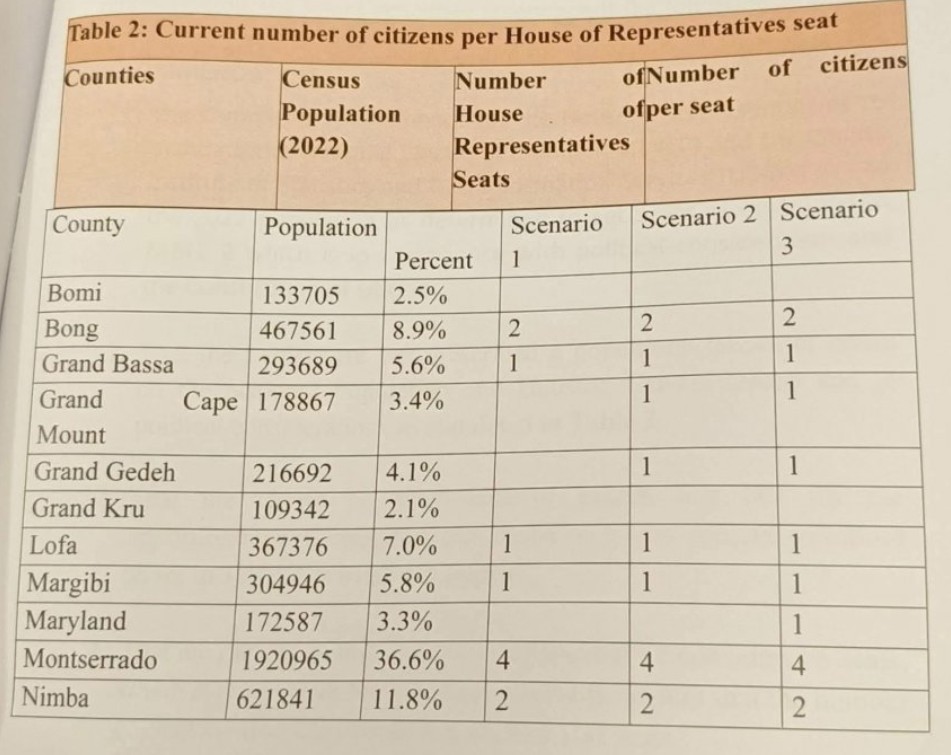
The House of Representatives has voted to expand its membership from 73 to 87 seats, approving the creation of 14 new electoral districts. The measure now awaits concurrence from the Senate before it can become law.

House of Representatives approves districts to 87

According to the proposal, the new districts will be distributed across nine counties based on population growth and representation needs. The breakdown is as follows:

  • Bong County: 2 additional seats
  • Grand Bassa County: 1 additional seat
  • Grand Cape Mount County: 1 additional seat
  • Grand Gedeh County: 1 additional seat
  • Lofa County: 2 additional seats
  • Margibi County: 1 additional seat
  • Montserrado County: 4 additional seats
  • Nimba County: 2 additional seats

In total, the redistribution adds 14 seats to the Legislature. Lawmakers supporting the measure say the expansion is necessary to ensure equitable representation as populations continue to shift and grow across the country.

The proposal will be forwarded to the Senate for consideration in the coming days. If approved, the new districts would be implemented ahead of the next election cycle.


Credit source: Daniel Theo Cole / knewsonline.com