LRA, Sierra Leone NRA Sign Strategic Agreement to Combat Cross-Border Tax Evasion

The Liberia Revenue Authority (LRA) and Sierra Leone’s National Revenue Authority (NRA) have signed a vital tax cooperation agreement aimed at strengthening cross-border tax compliance, enhancing information exchange, and combating tax evasion between the countries.

The Memorandum of Understanding (MoU) on Simultaneous Tax Examinations (STE) was signed in Freetown by LRA Commissioner General James Dorbor Jallah and NRA Commissioner General Jeneba Bangura on the sidelines of the 13th IMF AFRITAC West 2 Steering Committee Meeting.

The initiative is expected to improve tax compliance among multinational businesses and strengthen the ability of both countries to identify and address revenue leakages.

The agreement is in line with the ECOWAS Supplementary Act on Mutual Administrative Assistance in Tax Matters and establishes a framework for coordinated tax examinations involving taxpayers and business entities operating across Liberia and Sierra Leone.

Under the arrangement, both tax administrations will conduct simultaneous examinations of taxpayers with cross-border operations, transactions, or interests that may have tax implications in both jurisdictions.

The initiative is intended to strengthen information sharing, enhance audit effectiveness, improve tax compliance, and support efforts to detect and prevent tax avoidance and tax evasion.

The cooperation will focus on high-risk cross-border transactions, multinational business arrangements, transfer pricing issues, illicit financial flows, unreported income, and other activities that may result in tax avoidance or revenue leakage.

The MoU also provides a framework for identifying and addressing complex international tax risks, including undeclared business activities, non-compliant tax arrangements, and transactions involving jurisdictions that may pose heightened compliance concerns.

Through the agreement, both authorities will exchange relevant information, conduct joint risk assessments, coordinate audit activities, and strengthen collaboration on matters involving taxpayers operating in both countries.

The arrangement seeks to improve the determination of taxpayers’ correct tax liabilities, facilitate the exchange of information on multinational business practices, strengthen administrative cooperation, enhance the effectiveness of cross-border audits, and reduce compliance costs for both taxpayers and tax administrations.

Another key objective is to prevent double taxation and promote the early resolution of cross-border tax disputes, thereby creating a more predictable, transparent, and business-friendly tax environment for investors and companies operating in Liberia and Sierra Leone.

The MoU establishes procedures for selecting cases for simultaneous examination, conducting joint planning exercises, coordinating audit activities, and protecting taxpayer rights in accordance with the laws and administrative practices of both countries.

Information exchanged under the agreement will be protected in accordance with applicable ECOWAS legal instruments and national laws governing taxpayer confidentiality and the use of tax information.

Speaking following the signing ceremony, LRA Commissioner General James Dorbor Jallah described the agreement as an important milestone in regional tax cooperation and a practical mechanism for strengthening domestic revenue mobilization efforts.

He noted that increasing economic integration within the region requires stronger collaboration among tax administrations to effectively address cross-border tax risks, improve compliance, and safeguard government revenues.

For her part, NRA Commissioner General Jeneba Bangura described the agreement as a demonstration of the shared commitment of Liberia and Sierra Leone to strengthening tax compliance, improving information exchange, and enhancing cooperation in addressing cross-border tax challenges.

She noted that closer collaboration between the two revenue administrations would help protect their respective tax bases, improve domestic revenue mobilization, and contribute to regional economic growth and integration.

The agreement further reinforces the commitment of both countries to implementing international best practices in tax administration while advancing ECOWAS efforts to strengthen cooperation among member states in combating tax evasion, illicit financial flows, and aggressive tax avoidance schemes.

The agreement further positions Liberia among a growing number of African countries adopting coordinated approaches to addressing cross-border tax risks and enhancing international tax cooperation.

The initiative is supported by ECOWAS as part of efforts to strengthen regional tax cooperation and combat cross-border tax evasion. The MoU forms part of the LRA’s broader international cooperation strategy.

Earlier this month, the Authority signed three landmark agreements with the National Tax Service (NTS) of South Korea aimed at strengthening tax administration, enhancing information exchange, expanding technical cooperation, and supporting the modernization of Liberia’s tax administration.

Under the leadership of Commissioner General James Dorbor Jallah, the LRA continues to expand strategic partnerships and implement reform initiatives designed to strengthen compliance, enhance domestic revenue mobilization, improve institutional efficiency, and build a modern, intelligence-driven, and taxpayer-focused revenue administration capable of supporting Liberia’s national development agenda.

Source credit:  By Daily Observer
Liberia: In Major Shift, Coalition of Religious Leaders Urges Passage of Bill to Extend Abortion Access

Summary:

  • Liberia’s Inter-Religious Council, the umbrella body representing the country’s major Christian and Muslim institutions, is urging lawmakers to pass a stalled health bill that would expand access to abortion in certain cases, breaking with years of opposition to the measure by religious leaders.
  • Supporters say the bill is needed to reduce deaths and injuries from unsafe abortions and make it easier for doctors to save women facing life-threatening pregnancy complications.
  • The Catholic Bishops’ Conference, the official body representing Catholic bishops nationwide, has rejected the Council’s position, setting up a renewed battle in the Senate over one of Liberia’s most controversial health laws.

In a major boost to efforts to pass a health bill that would expand access to abortion in Liberia, the Inter-Religious Council, the umbrella body representing the country’s major Christian and Muslim institutions, has called on lawmakers to pass the legislation, breaking with years of religious opposition that has helped stall the bill in the Senate.

“The health, safety, and dignity of individuals within families constitute a core component of family strengthening,” the Council said in a statement released last week.

The Council’s intervention is significant because religious opposition has been one of the strongest barriers to passage of the Public Health Bill, a sweeping reform measure intended to modernize Liberia’s decades-old public health system. While the bill contains provisions on disease surveillance, emergency preparedness, vaccinations, environmental health, and occupational safety, public debate has focused on provisions that would expand access to abortion under defined circumstances.

Supporters of the bill were surprised and grateful for the Council’s change of heart.

“That’s what I wanted,” said Joseph Somwarbi, a pharmacist and former legislator who said he lost his seat because he supported the bill. “And if people have understood that and find it necessary that our women and girl children should live, then there’s no better time than now.”

They said Council support could be what is needed to get it passed.

“Every time we delay this bill, women remain at risk, especially women in rural Liberia,” said Amelia Siaffa, acting executive director of Sister Aid Liberia, a women’s rights organization that advocates for sexual and reproductive health and gender equality.

Senator Amara Konneh of Gbarpolu in chats with Dabah Varpilah, Senate Health Committee chair, during a recent Senate session.

The bill has been stalled in the Senate since 2022 without enough votes to pass it, despite repeated efforts by health advocates who argued it would reduce the country’s exceptionally high maternal and infant deaths and injuries linked to life-threatening pregnancy complications and unsafe abortions.

But the Council’s position immediately drew opposition from one of Liberia’s most influential religious groups.

In a statement, the Catholic Bishops’ Conference of Liberia, the official body representing Catholic bishops nationwide, said it was “not in agreement” with the Council’s endorsement of the bill and reaffirmed its opposition to abortion provisions contained in the legislation.

Citing what they said were Biblical teachings and Catholic doctrine that human life begins at conception, the Conference said they “unequivocally reject the concept of justified abortion” contained in the proposed law.

The Bishop’s statement was signed by Archbishop Gabriel Blamo Jubwe of Monrovia, Bishop Anthony Borwah of Gbarnga, and Bishop Andrew Jagaye Karnley of Cape Palmas.

The dispute emerged after the Inter-Religious Council publicly distanced itself from the “Strengthening Families Conference,” an annual regional gathering led by the Church of Jesus Christ of Latter-day Saints, a 19th-century American church whose beliefs diverge from mainstream Christian denominations on key doctrines and opposes elected abortion. The Church, whose followers are widely known as “Mormons”, has been growing rapidly in Liberia in recent years thanks to aggressive recruitment activities.

The Council said it had not been consulted about the conference and criticized what it described as approaches that fail to adequately address challenges affecting Liberian families, including maternal mortality, teenage pregnancy, gender-based violence, poverty, and limited access to healthcare and education.

Conference organizers, the Church of Jesus Christ of Latter-day Saints, did not respond to emails and follow-ups until the deadline.Supporters of the Public Health Bill said the Council’s intervention represents a potentially important political breakthrough. Religious opposition played a major role in slowing the bill’s progress before the 2023 elections, when some lawmakers worried that support for the legislation could hurt their reelection prospects.

Leadership of the inter-religious council of Liberia, a moral voice of all religious groups in the country, during the release of its position statement calling for the passage of the public health bill.

Under Liberia’s current law, abortion is permitted only in limited circumstances, including rape, incest, serious fetal abnormalities, or when a pregnancy threatens a woman’s health. Even then, obtaining approval can be difficult because the law requires authorization from two doctors – a significant obstacle in many rural areas where doctors are scarce. Advocates say many of Liberia’s poor young women do not know they are even pregnant until far into the pregnancy, and they would not have the money or knowledge needed to approach doctors for an abortion.

The proposed legislation would allow abortion up to 14 weeks of pregnancy if performed by a doctor.

Supporters argue that the amendment is not intended to create abortion on demand but to reduce deaths and injuries caused by unsafe abortions and allow doctors to respond more quickly when pregnancies that have gone wrong threaten a woman’s life.

Liberia faces a serious maternal health crisis. World Bank data shows 628 maternal deaths per 100,000 live births, one of the highest rates in the world. A 2021 study by Liberia’s Ministry of Health and the Clinton Health Access Initiative found that more than 14,500 women sought treatment for abortion-related complications in a single year. One in 10 suffer die of severe injuries.

For D., a young Liberian woman who still lives with chronic pain after seeking help from an untrained provider as a teenager, those statistics are deeply personal.

She was 15, pregnant, and terrified her parents would find out.

“The man put me on a long bed,” she recalled in an interview earlier this year. (FrontPage Africa/New Narratives is using only her initial to protect her from stigma.) “Then he had plenty of iron in a pan. Then he used that. He put it inside me.”

Doctors later told her the procedure had damaged her body. Today, she fears she may never have children.

Advocates say stories like hers explain why reform has become such an urgent issue.Somwarbi also argued that the current law places women facing life-threatening pregnancies at unnecessary risk.

D., a young woman who sought a dangerous alternative to abort her pregnancy out of fear of being punished by her parents. She did not want to live with pain and fear; she may not have a child of her own as a result of the procedure.

Somwarbi said the amendment would allow doctors to act more quickly in emergencies, rather than forcing patients to navigate approval processes that can delay care. He argued that requirements for multiple doctor approvals are often impossible to meet in rural Liberia and contribute to unsafe abortions.

He said this issue is so important that he was willing to lose his seat to defend the bill.

“People were afraid simply because they felt that it was going to hinder their election, for which I am a victim,” said Somwarbi. “For me, I felt that the life of another person is more important than elections.”

This story was produced in collaboration with New Narratives as part of the Investigating Liberia project. Funding was provided by a private donor and the Swedish International Development Cooperation Agency. The donors had no say in the story’s content.


Source credit:  By Joyclyn Wea, gender correspondent with New Narratives/ FPA

Zeno Industries Expands Investment in Liberia’s Cocoa, Coffee Sector

Zeno Industries Inc., a cocoa and coffee buying and exporting company operating in Liberia, has announced increased investment in the country’s cocoa and coffee value chain as part of efforts to promote prosperity through farmer empowerment and job creation.

Speaking to the Daily Observer, the company’s new Manager, Rita Zeno, said Zeno Industries is committed to transforming Liberia’s cocoa and coffee sectors through sustainable agriculture, farmer empowerment, and strong traceability systems, while creating employment opportunities for local communities.

She noted that Zeno Industries is a Liberian-owned company established in 1981 but whose operations were disrupted during the civil war. According to her, the company resumed full operations in 2022 after years of inactivity caused by the conflict.

“Because of the civil war, Zeno Industries Inc. resumed operations in 2022 after the Liberian civil war, demonstrating remarkable resilience and a deep commitment to its homeland,” she said.

Ms. Zeno disclosed that the company currently employs about 450 workers and works with a network of more than 12,234 local farmers integrated into its traceability and European Union Deforestation Regulation (EUDR)-compliant system.

She said Zeno Industries is setting new standards for ethical and environmentally responsible agricultural production in Liberia and the southern region, adding that the company is on track to achieve full organic certification within the next four months.

According to her, this goal is part of efforts to meet international best practices and improve the global competitiveness of Liberia’s agricultural exports.

During a visit by the Daily Observer to the company’s warehouse in Ganta, several employees were observed working across two shifts, earning a daily wage of L$900, paid every two weeks.

A shift supervisor, identified as John, explained that the company operates two eight-hour shifts daily, with a third shift introduced during peak cocoa harvest seasons. He also noted that the company provides lunch for all workers.

Ms. Zeno further stated that Zeno Industries is committed to creating dignified employment opportunities, with about 80 percent of its workforce being women and 20 percent men.

She said the company’s gender-inclusive employment model reflects its broader commitment to social equity, economic empowerment, and community resilience.

Zeno Industries has also introduced a digital traceability system developed in partnership with Polipus.com, designed to ensure transparency from farm to export and verify product origin for international buyers.

“This system is fully compliant with the stringent requirements of the EU Deforestation Regulation (EUDR), positioning Zeno Industries and its partner farmers at the forefront of sustainable sourcing,” she said.

The company also welcomed recent developments within the Liberia Agricultural Commodity Regulatory Authority (LACRA), including the appointment of Dr. J. Alexander Nuetah as Board Director, as well as the reinstatement of Director General Christopher Sankolo and Deputy Director General for Operations and Technical Services Godia Alpha Kortu Gongolee.

Ms. Zeno reaffirmed Zeno Industries’ commitment to working closely with LACRA to expand employment opportunities and promote sustainable growth in Liberia’s agricultural sector.

She added that beyond agricultural production, the company plans to invest in community development projects, including scholarships, water pump installations, and sanitation initiatives aimed at improving living conditions in farming communities.

Source credit:  By Ishmael F. Menkor / Daily Observer

“Go and Sin No More” – House Grants Clemency to Three Legislators

The Plenary of the House of Representatives has exercised its constitutional and parliamentary discretion to grant what legislative sources describe as clemency and disciplinary dispensation to three lawmakers following an internal inquiry into alleged breaches of parliamentary decorum and conduct.

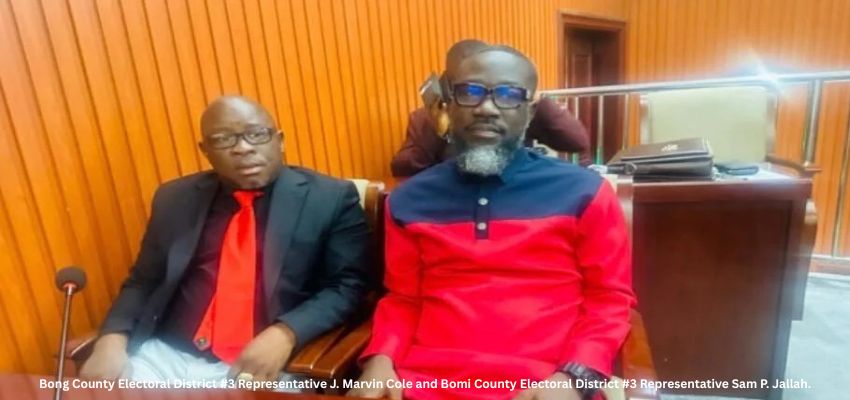
The decision affects Bong County Electoral District #3 Representative J. Marvin Cole, Gbarpolu County Electoral District #2 Representative Luther S. Collins, and Bomi County Electoral District #3 Representative Sam P. Jallah.

The lawmakers had come under legislative scrutiny and internal censure proceedings after comments and actions were deemed by some members of the House to be inconsistent with parliamentary privilege, institutional dignity, and the established standards of conduct governing the Chamber.

According to parliamentary sources, the matter engaged the House’s internal disciplinary architecture, including referral to the Committee on Rules, Order and Administration for review under the Standing Rules of the House, Code of Conduct framework, and parliamentary ethics provisions.

The Plenary decision was reached during Thursday’s sitting following deliberations in which Rep. Cole appeared before lawmakers and reaffirmed an earlier apology tendered before the House Committee on Rules, Order and Administration, Speaker Richard Nagbe Koon, and members of the leadership bloc of the House.

In his submission, Rep. Cole acknowledged that his remarks and conduct could be interpreted as an encroachment upon the authority and institutional integrity of the Legislature and accordingly expressed contrition.

“I understand and acknowledge that some of my actions and comments may have been interpreted as disrespectful to the authority of this august body, and for that, I am very sorry,” he told Plenary.

However, the House reportedly exercised its inherent disciplinary prerogative and plenary authority to resolve the matter through internal settlement rather than referral to prolonged sanctioning procedures, thereby effectively issuing what some lawmakers described as “legislative pardon by resolution.”

As part of the resolution, Representatives Sam P. Jallah and Luther S. Collins are required to publish formal letters of apology in a widely circulated newspaper and submit proof of publication to the Office of the Chief Clerk, in line with parliamentary corrective measures and reputational sanctioning practice.

The actions giving rise to the inquiry were previously characterized within the chamber as conduct potentially undermining parliamentary order, decorum, and respect for the Speakership and institutional hierarchy.

The resolution, described by some members as “go and sin no more,” reflects the House’s reliance on internal dispute resolution mechanisms, restorative parliamentary justice, and institutional self-regulation, as opposed to external adjudication.


Source credit:  By Leroy M. Sonpon, III / Daily Observer

Liberia: House Speaker Koon Engages Thousands of Citizens At Government Town Hall In Buchanan

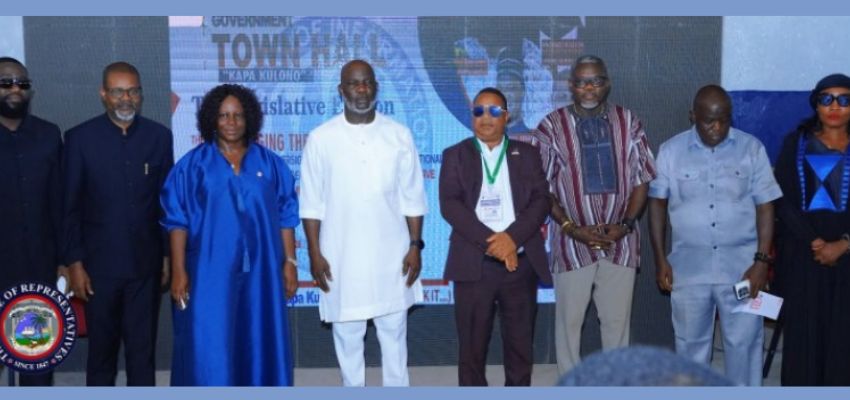
MONROVIA –The Speaker of the House of Representatives, Richard Nagbe Koon, recently engaged thousands of citizens, including traditional chiefs, elders, students, members of the business community and ordinary residents of Grand Bassa County during the Government Town Hall, popularly known as “Kapa Kulono” (Come Let’s Talk It).

The Legislative Edition of the Town Hall, organized by the Ministry of Information, Cultural Affairs and Tourism under the theme:, “Bridging the Gap: Legislative Oversight, Citizen Engagement, and National Development under the ARREST Agenda for Inclusive Development (AAID),” was held at the Fairground in Buchanan City.

Addressing the gathering, Speaker Koon provided a comprehensive overview of the work and achievements of the House of Representatives, highlighting key legislation passed by the House and the positive impact of those measures on the lives of Liberians.

He emphasized the Legislature’s commitment to advancing national development through effective lawmaking, oversight, and representation.

The Speaker also outlined ongoing reforms and initiatives aimed at improving governance, accountability, and service delivery across the country.

He noted that the House remains committed to ensuring that the voices and concerns of citizens are reflected in the legislative process.

Speaker Koon commended the Ministry of Information for taking government closer to the people through the Town Hall initiative, describing it as an important platform for transparency, public participation and direct engagement between government officials and citizens.

“I want to thank the Ministry of Information for creating this opportunity for government officials to engage citizens directly and provide updates on the development initiatives being undertaken across our country. Such engagements strengthen democracy and help build trust between the people and their government,” Speaker Koon said.

The Town Hall brought together the President Pro Tempore of the Liberian Senate, Nyonblee Karnga-Lawrence, Senators Darius Dillon and Numene T.H. Bartekwa, Representatives Matthew Joe and Alfred Flomo as well as local government officials, traditional leaders, students, members of the business community, and citizens from across Grand Bassa County.

During an interactive question-and-answer session, citizens openly engaged Speaker Koon on a range of national and local issues. The Speaker responded to concerns raised and provided clarifications on legislative matters and development priorities.

Many participants praised Speaker Koon for his openness and willingness to engage directly with citizens.

They expressed appreciation for his leadership and wished him continued success as he guides the affairs of the House of Representatives.

The Government Town Hall initiative continues to serve as an important platform for promoting dialogue, accountability, and citizen participation in governance, while fostering a stronger connection between the government and the people it serves.


Source credit: Staff Reporter/Front Page Africa

Liberia Exports Over US$200M to China in First Quarter of 2026

Liberia’s exports to China surpassed US$200 million during the first quarter of 2026, marking one of the most dramatic increases in bilateral trade in recent years and signaling the early success of China’s zero-tariff policy for African countries.

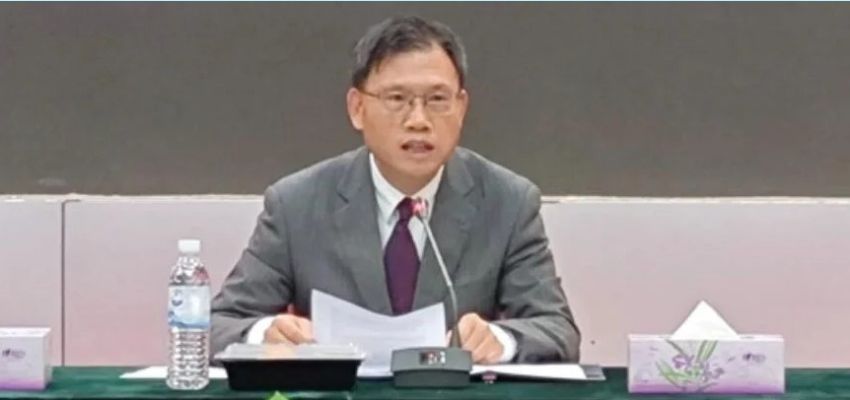
The figures were disclosed by Chinese Ambassador to Liberia Yin Chengwu during a media briefing in Monrovia on May 28, where he highlighted the growing economic partnership between the two countries and outlined opportunities for Liberia to further expand its exports into the Chinese market.

According to Ambassador Yin, Liberia’s exports to China exceeded US$200 million between January and March 2026, representing a more than thirty-fold increase compared to the same period in 2025. The surge was driven primarily by rising iron ore shipments and increased exports of natural rubber following the full resumption of mining operations at the Bong and Bomi mines.

The remarkable growth comes amid the implementation of China’s landmark decision to grant zero-tariff treatment to all African countries that maintain diplomatic relations with Beijing. The policy officially took effect on May 1, 2026, and is being viewed as a major boost for African exports and economic cooperation under the Forum on China-Africa Cooperation (FOCAC).

Ambassador Yin described the initiative as a historic step in China’s trade relations with Africa.

“China has become the world’s first major economy to unilaterally grant tariff exemption to all African countries having diplomatic relations with China, as well as all least developed countries having diplomatic relations with China,” Ambassador Yin stated.

He noted that the policy fulfills commitments made by Chinese President Xi Jinping during the 2024 Beijing Summit of FOCAC and demonstrates China’s continued support for Africa’s development.

“Supporting Africa’s development is China’s unwavering principle and consistent policy,” Yin said, citing comments made by Chinese Foreign Minister Wang Yi during discussions with Liberia’s Minister of Foreign Affairs, Sara Beysolow Nyanti, during her recent official visit to China.

“The zero-tariff treatment for all African countries having diplomatic relations with China, personally announced by President Xi Jinping, has been officially implemented, which fully demonstrates China’s commitment to the principle of sincerity, real results, amity and good faith in its relations with Africa,” he added.

While the continent-wide tariff exemption officially began this year, Liberia had already started benefiting from preferential access to the Chinese market months earlier. Ambassador Yin revealed that China implemented zero tariffs on 100 percent of Liberian products in December 2024, positioning Liberia among the earliest beneficiaries of the initiative.

During her official visit to China from May 18 to May 22, Foreign Minister Sara Beysolow Nyanti welcomed the policy and pledged Liberia’s commitment to maximizing the opportunities it presents.

“Minister Nyanti spoke highly of this policy and noted that Liberia will make most use of it and try to export more products to China,” Ambassador Yin disclosed.

Trade statistics presented by the Ambassador indicate that Liberia’s exports to China have been steadily increasing even before the latest surge.

According to Chinese customs data, imports from Liberia reached US$131 million in 2025, representing an increase of approximately 24 percent compared to the previous year.

Iron ore accounted for the largest share, with imports totaling US$97.75 million, a year-on-year increase of approximately 29 percent. Natural rubber exports also recorded substantial growth, reaching US$17.45 million, up by about 75 percent from 2024 levels.

However, the most significant gains emerged during the first three months of 2026.

Chinese imports from Liberia exceeded US$200 million during the first quarter alone, with iron ore imports valued at approximately US$188 million. This represented a thirteen-fold increase compared to the same period in 2025.

Ambassador Yin attributed the surge to renewed mining activity by Chinese companies operating in Liberia.

“Benefiting from the full resumption of production and operation by Chinese enterprises at the Bong Mine and Bomi Mine in Liberia, iron ore exports to China reached 1.86 million tons in the first quarter, a growth of over 37 times,” he revealed.

Natural rubber exports also posted impressive gains.

According to the Ambassador, rubber exports to China reached 7,044 tons during the first quarter, approximately nine times higher than the volume recorded during the same period last year.

“Rubber exports to China reached 7,044 tons, an increase of approximately nine times year-on-year,” he said.

Beyond mining and rubber exports, China and Liberia are now exploring new opportunities to diversify Liberia’s export portfolio.

One of the most promising initiatives involves the cultivation and export of chili peppers to the Chinese market.

Ambassador Yin disclosed that Liberia’s Ministry of Agriculture is partnering with Chinese enterprises to develop a chili pepper value chain capable of supplying Chinese consumers.

“The Liberian Ministry of Agriculture is cooperating with Chinese enterprises to grow chili peppers for export to China. Farmers in five counties have already received chili seeds and begun planting,” he announced.

The project is expected to produce Liberia’s first shipment of dried chili peppers to China within the next several months.

“It is said that 10 tons of dried chili peppers will be exported to China by the end of this year or early next year,” Yin added.

The Chinese diplomat described the zero-tariff arrangement as a significant opportunity to deepen bilateral economic cooperation while helping Liberia diversify its export base and increase foreign exchange earnings.

“The zero-tariff policy is a significant opportunity to advance China-Liberia relations, especially economic and trade cooperation,” he emphasized.

“We are ready to work with the Liberian side to make full and good use of this opportunity, contributing to the development of bilateral relations and the improvement of the well-being of the Liberian people.”

Ambassador Yin said both governments can collaborate to identify additional products with strong export potential and align Chinese market-access initiatives with Liberia’s broader development priorities.

“We may work together to focus on Liberia’s advantageous products, strengthen the alignment of China’s zero-tariff treatment with Liberia’s development plans in relevant fields, and identify competitive, high-potential, and sustainable export products for Liberia’s expanding exports to China,” he said.

The Ambassador also encouraged Liberia to take advantage of major Chinese trade and investment platforms, including the China International Import Expo, the China-Africa Economic and Trade Expo, and the Canton Fair.

He noted that China is simultaneously addressing barriers that have traditionally limited African exports from entering international markets.

According to him, Chinese authorities are working to overcome what he described as the “last mile” challenge through simplified customs procedures, expanded use of electronic documentation, mutual recognition of standards, and dedicated green channels for agricultural products.

“By simplifying customs procedures, promoting electronic documentation and mutual recognition of standards, and expanding ‘green channels’ for agricultural product access, China is striving to facilitate greater opportunities for African countries, including Liberia, to expand exports to China,” he explained.

Looking ahead, Ambassador Yin expressed confidence that Liberia’s access to China’s vast consumer market will continue to grow beyond traditional commodities.

“Iron ore, rubber and dried chili peppers are just the starting point,” he said.

“We believe that with the joint efforts of both sides, more high-quality Liberian products will enter the vast Chinese market in the future, bringing even greater tangible benefits to our two peoples.”

For Liberia, the export figures represent more than a temporary trade boost. They reflect growing opportunities for increased foreign exchange earnings, economic diversification, and stronger integration into one of the world’s largest consumer markets. The challenge now will be ensuring that Liberian producers, exporters, and policymakers capitalize on the momentum to build a broader and more sustainable export economy capable of delivering long-term growth and development.


Source credit: By David A. Yates / Liberian Observer

Gov’t Addresses The Deadly Wait for Emergency Care

— As 25 New Ambulances Hit Rural Roads

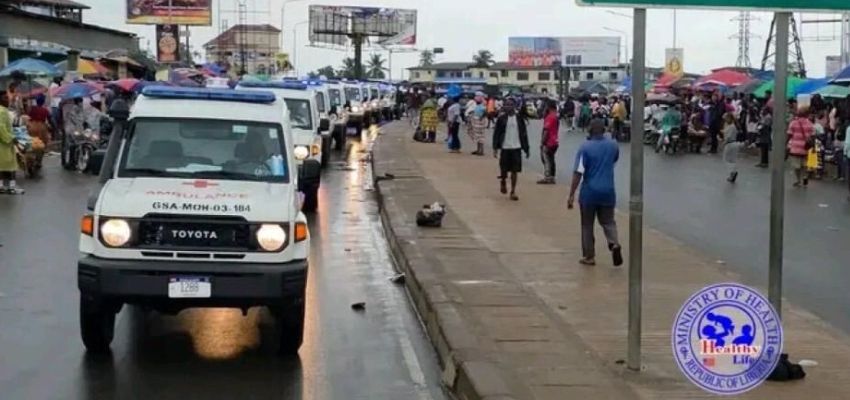
In rural Liberia, the difference between life and death is often measured in hours on a dirt road. On Wednesday, the Ministry of Health cut that clock down with the commissioning of 25 ambulances—bound for the counties where a ruptured uterus, a motorcycle crash, or a child’s fever can turn fatal while families wait for a ride.

 The new fleet is one of the largest single boosts to the country’s emergency referral system in years.

“The commissioning of these ambulances demonstrates our continued commitment to improving access to quality healthcare services for all Liberians, especially those living in remote communities,” Madam Martha C. Morris, Deputy Minister for Administration at the Ministry of Health, said.

The commissioning ceremony, held in Monrovia on Wednesday, June 3, drew a full house with government officials, development partners. Others, including representatives from the Ministry of Health, the National Public Health Institute, and county health officers, watched as the keys were handed over. The resounding message at the event was blunt—emergency transport is no longer an afterthought.

For years, the country’s referral chain has snapped at the same weak link. Clinics diagnose the problem. Hospitals can treat it. But the patient never makes it there. Roads wash out in the rainy season. Fuel is unaffordable. Private vehicles are scarce. The ambulance never comes.

Dr. Teyah Sackie Moore, Acting Chief Medical Officer of Liberia, put numbers to the gap. “Timely transportation of patients is a critical component of an effective health system,” Dr. Teyah Sackie Moore said. “These ambulances will help bridge gaps in emergency care and referrals across the country.”

Health workers say the stakes are highest for obstetric emergencies. A woman bleeding after delivery needs surgery within two hours. A newborn who cannot breathe needs oxygen in minutes. Trauma from road accidents is another killer. Liberia’s main highways record frequent crashes, yet ambulances are clustered in Monrovia. The new units are meant to push coverage outward.

The Ministry did not release a county-by-county breakdown Wednesday. Officials said the 25 ambulances will go to “priority areas with the longest referral times.” Each vehicle will serve multiple districts, with county health teams responsible for routing and maintenance.

That raises familiar questions. Past ambulance donations have stalled for lack of fuel, drivers, or spare parts. Hon. Martha C. Morris addressed the concern indirectly, framing the commissioning as part of a broader push to strengthen delivery. “The commissioning of these ambulances demonstrates our continued commitment to improving access to quality healthcare services for all Liberians,” Hon. Martha C. Morris said.

Development partners in attendance have backed fuel and maintenance schemes in other counties. Whether those models will scale with the new fleet remains to be seen. For now, the Ministry is banking on county ownership to keep the vehicles running.

The handover comes as Liberia works to rebuild emergency services hollowed out by years of underinvestment. The 2014 to 2016 Ebola epidemic exposed the system’s fragility. COVID-19 strained it again. Today, many district hospitals still lack basic resuscitation equipment, and referral hospitals operate with limited blood banks and surgical capacity.

Ambulances alone will not fix that. But they plug a hole that frontline nurses call daily. “We stabilize what we can,” one county health officer said on the sidelines. “Then we pray for transport.”

Dr. Teyah Sackie Moore tied the vehicles to larger reforms. Faster referrals, he said, will only matter if receiving hospitals are ready. The Ministry has been training emergency responders and equipping casualty wards, but gaps persist. “Timely transportation of patients is a critical component of an effective health system,” Dr. Teyah Sackie Moore repeated. “These ambulances will help bridge gaps in emergency care and referrals across the country.”

The Ministry of Health said operational guidelines, driver recruitment, and maintenance plans will follow the commissioning. County health teams are expected to integrate the ambulances into existing referral protocols and report response times to Monrovia.

Civil society groups welcomed the move but urged transparency. Publishing the distribution list, fuel allocations, and maintenance budgets, they argue, will let communities track whether the ambulances stay on the road.

For families in Lofa, Grand Kru, River Gee, and other remote counties, the policy details are secondary. What matters is the siren. What matters is a vehicle that shows up when needed the most.

When the road is long and the bleeding will not stop, 25 new ambulances mean Liberia finally has a chance to answer the call.


Source credit: By Rahab N. Meankimie / Liberian Observer

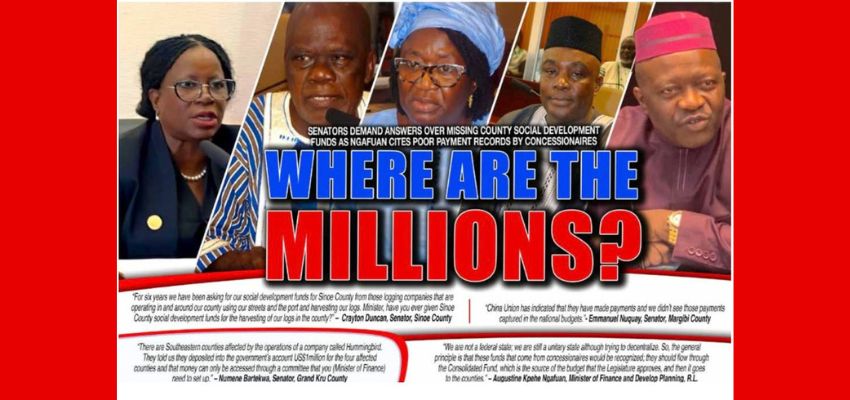
Liberia: Senators Demand Answers Over Missing County Social Development Funds as Ngafuan Cites Poor Payment Records by Concessionaires

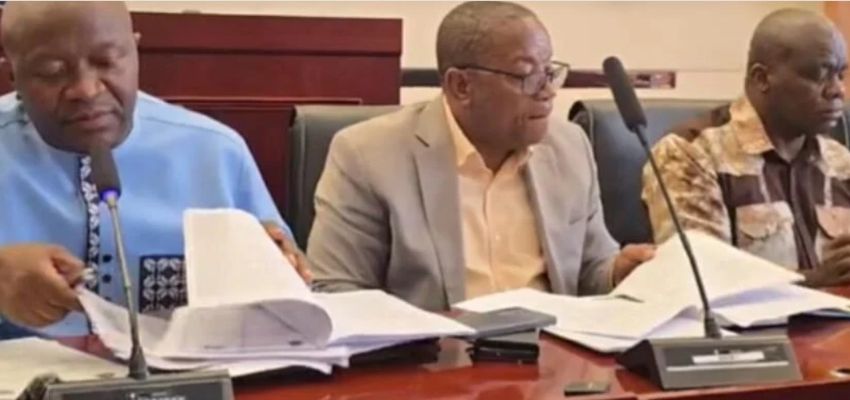
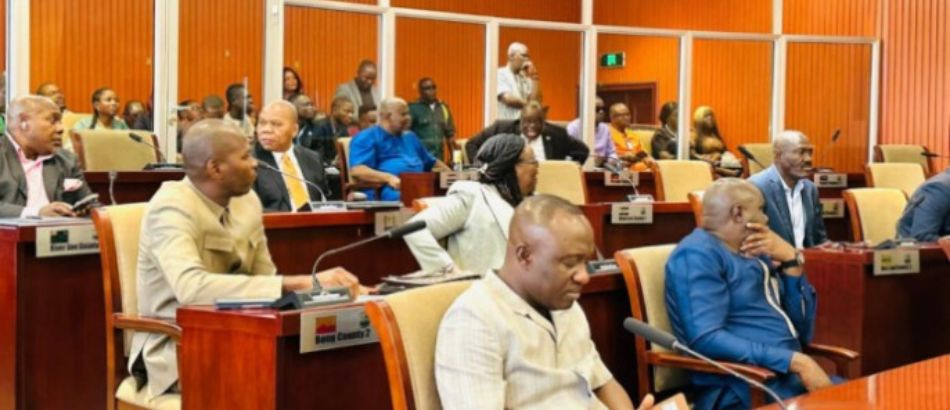
Monrovia – A growing controversy over millions of dollars reportedly paid by concession companies for county development projects took center stage at the Liberian Senate on Thursday, as lawmakers demanded answers from Finance and Development Planning Minister Augustine Kpehe Ngafuan regarding funds they say have failed to reach beneficiary counties.

Senators from several concession-hosting counties accused successive governments of withholding Social Development Funds (SDF) paid by companies operating in their regions, depriving citizens of much-needed infrastructure and social services.

The concerns were raised during a Senate hearing attended by Minister Ngafuan, who acknowledged longstanding challenges in tracking and disbursing the funds but maintained that records of many past payments remain incomplete.

The lawmakers cited reports from major concessionaires—including Hummingbird Resources, China Union, Western Cluster, and ArcelorMittal—that they had deposited millions of dollars into government accounts for onward transfer to affected counties.

However, senators said those funds have either not been reflected in national budgets or have not been disbursed to local authorities.

Leading the charge was Sinoe County Senator Crayton Duncan, who questioned whether his county had ever received social development funds from logging companies operating within its borders.

“For six years we have been asking for our social development funds from those logging companies operating in and around Sinoe County, using our roads and port facilities while harvesting our logs,” Duncan said. “Minister, have you ever given Sinoe County social development funds from the harvesting of our logs?”

Margibi County Senator Emmanuel Nuquay raised similar concerns regarding payments reportedly made by China Union.

“China Union has indicated that they have made payments, and we didn’t see those payments captured in the national budgets,” Nuquay told the Finance Minister.

Grand Kru County Senator Numene Bartekwa pointed to a reported US$1 million payment by Hummingbird Resources intended for four southeastern counties.

“There are Southeastern counties affected by the operations of a company called Hummingbird,” Bartekwa said. “They told us they deposited US$1 million into the government’s account for the four affected counties, and that money can only be accessed through a committee that you need to set up.”

Other senators joined the discussion, including Nimba County Senator Nya Twayen, who questioned the status of payments allegedly made by Ivanhoe Atlantic and expressed concern over delays in transferring concession-related revenues to Nimba County.

Grand Cape Mount County Senator Dabah Varpilah also raised concerns on behalf of counties in the western region.

“The Western Region Legislative Caucus also has concerns about monies paid by Western Cluster to government that have not been transferred to the counties,” she said.

The lawmakers argued that the continued delay in releasing Social Development Funds has denied residents in concession-affected communities access to roads, schools, clinics, and other critical development projects envisioned under concession agreements.

Responding to the concerns, Minister Ngafuan admitted that previous administrations had often failed to remit county development funds in a timely manner but stressed that the current government is working to improve the process.

“We are not a federal state; we are still a unitary state although trying to decentralize,” Ngafuan explained. “The general principle is that these funds that come from concessionaires should flow through the Consolidated Fund, which is the source of the budget approved by the Legislature, and then be allocated to the counties.”

According to him, government intends to reduce delays between the receipt of concession payments and their eventual disbursement to counties.

“If a concessionaire makes a payment in January, I don’t want a situation where counties receive that money in December,” he said. “We are working on that.”

Ngafuan disclosed that the Ministry has been engaging local authorities and reviewing procedures to ensure that legitimate payments are promptly released.

However, he acknowledged significant challenges in verifying some of the claims being made by concessionaires and county officials.

“Sometimes concessionaires will say they have paid the money, and when we check, we don’t find it,” he said. “But where we establish that payments were made and there are administrative actions required, those actions will be expedited so that the counties receive their money.”

The Finance Minister further revealed that while current payment records are available, historical records covering previous years are often incomplete.

“Past records are scanty,” Ngafuan admitted, pledging to work with the Liberia Revenue Authority (LRA) and the Comptroller and Accountant General’s Office to determine whether companies such as Hummingbird and others had made payments that were never transferred to beneficiary counties.

He also emphasized that the Ministry of Finance does not have unilateral authority to spend county social development funds.

“Those funds belong to the counties,” he said. “I can assure you that where we find evidence that concessionaires have made payments intended for counties, those counties will receive those funds.”

Ngafuan concluded by promising reforms aimed at improving transparency, accountability, and the timely transfer of Social Development Funds, while lawmakers signaled that they would continue pressing for answers on what they believe could amount to millions of dollars owed to counties across Liberia.

For many senators, the central question remains unanswered: If concession companies paid the money, where are the millions?


Source credit: By Obediah Johnson/Front page Africa

Ngafuan Clarifies Revenue Sharing, Fiscal Decentralization Progress

Finance and Development Planning Minister Augustine Kpehe Ngafuan, along with Deputy Minister for Fiscal Affairs Anthony G. Myers, Assistant Minister for Revenue and Tax Policy Andrew Ngollie, and the Director for Fiscal Decentralization, appeared before the Liberian Senate on Thursday to provide updates and clarification on the implementation of the country’s revenue-sharing and local government fiscal decentralization framework.

The appearance followed a formal citation from the Liberian Senate requesting clarity on the establishment of local government fiscal structures, the operationalization of the fiscal board, and progress in implementing the revenue-sharing law under Liberia’s decentralization agenda.

In a communication read before the hearing, the Senate expressed concern over what it described as the need for “clarity and information, as well as reconciling the establishment of local government and the fiscal board in accordance with the full implementation of the revenue-sharing law.” The Senate further emphasized that the ministers’ appearance would enable lawmakers to make “decisions from an informed position.”

Responding to lawmakers, Finance Minister Augustine Kpehe Ngafuan said he appeared alongside senior technical officials due to the complexity and importance of the matter, noting that fiscal decentralization remains a long-term national reform process.

He explained that Liberia’s decentralization agenda has evolved over time through successive national development frameworks, including earlier governance reforms, the Agenda for Transformation, and the current ARREST Agenda for Inclusive Development, all of which emphasize the transfer of responsibilities and resources to local governments.

Ngafuan noted that the country has made gradual progress, including the passage of the Local Government Act in 2018 (approved in 2019), the Revenue Sharing Law in 2022, and the transformation of the Ministry of Internal Affairs into the Ministry of Local Government. He also referenced the establishment of County Service Centers in several counties as part of efforts to bring services closer to citizens.

“These are positive steps the country has been taking over time,” he said, adding that Liberia is “on a path, a journey” toward full decentralization.

He further explained that the government has begun the gradual rollout of the Integrated Financial Management Information System (IFMIS) at the county level, allowing limited budget execution responsibilities to be decentralized as part of a transitional arrangement.

According to him, the Ministry of Finance and Development Planning has also been working with other institutions to build capacity at the county level to ensure that fiscal responsibilities are properly managed once fully devolved.

Assistant Minister for Revenue and Tax Policy, Andrew Ngollie (as referenced in the hearing materials), provided technical clarification on the establishment of the Local Government Fiscal Council, which is a key requirement under the Local Government Act.

He explained that Section 4.26 of the Act provides for the creation of fiscal councils that will serve as coordinating and advisory bodies between local authorities, the Ministry of Finance, and the Legislature on matters of revenue allocation, transfers, and fiscal management.

According to him, the Ministry has already developed Terms of Reference for the fiscal council in 2024 and adopted implementing regulations for the revenue-sharing framework in 2025 through multi-stakeholder consultations.

He disclosed that nominations for the formal establishment of the Local Government Fiscal Council will be submitted to the President within weeks, describing the body as essential for determining and managing transfers related to natural resource revenues, central government allocations, and locally generated income.

“In the absence of this council, most of the requirements for revenue sharing cannot be fully implemented,” he said, noting that the delay is due to “institutional readiness challenges rather than lack of political will.”

He added that county treasuries remain a critical component of the fiscal decentralization framework, as they provide the administrative structure through which local governments will manage public funds.

Officials further explained that Liberia currently has several operational county treasury systems in selected counties, with plans to expand coverage nationwide. Additional treasuries are expected to be established in more counties as part of the next phase of implementation, ensuring that all 15 counties eventually have access to localized financial management systems.

A technical official involved in the process described the county treasury system as a mechanism designed to bring financial management closer to the counties, reducing the need for county-level officials to travel to Monrovia for budget processing and financial approvals.

“The idea is simple,” the official said. “Everything related to budgeting and financial management will be handled at the county level so that services are delivered faster and more efficiently.”

The Finance Ministry emphasized that while progress has been made, full implementation of the revenue-sharing framework requires coordination among multiple institutions, including the Ministry of Local Government, the Ministry of Finance and Development Planning, and the Legislature.

Lawmakers, however, raised concerns about the pace of implementation, questioning whether delays in establishing fiscal structures could slow down the actual transfer of resources to counties.

In response, officials assured the Senate that the government is already taking transitional steps and that the establishment of the fiscal council will significantly accelerate implementation once completed.

The hearing concluded with a mutual understanding that fiscal decentralization remains a key national reform, but one that requires phased implementation, institutional strengthening, and continued legislative oversight to ensure effective and accountable local governance across Liberia.


Source credit: By David A. Yates / Liberian Observer

Former Foreign Minister Kemayah Dismisses Claims Ex-President Weah Has Quit 2029 Race

Monrovia – Former Foreign Minister Dee-Maxwell Saah Kemayah has firmly rejected reports suggesting that former President George Manneh Weah has abandoned plans to contest Liberia’s 2029 presidential election, insisting that the former Liberian leader remains committed to seeking a return to power.

Kemayah’s comments come amid growing speculation that Weah may have yielded his presidential ambitions to Alternative National Congress political leader Alexander Cummings as opposition parties explore possible alliances ahead of the next election cycle.

Speaking on the matter, Kemayah described such claims as false, unrealistic, and politically motivated.

“For anyone to think that His Excellency President Dr. George Weah, the 25th President of Liberia and the incoming 27th President of Liberia, will surrender that desire to contest the presidency to anyone on planet earth—that is inconceivable; it is not practical,” Kemayah declared.

“That thought in itself is diabolical, and it is wickedness to the Liberian people.”

He further dismissed suggestions that Weah would step aside in favor of another political figure.

“It is something that is not conceivable, something that is not practical. This is something far-fetched. This is something that is not possible. This is something that will not become reality,” he added.

‘Weah shall Be a Candidate’

Kemayah revealed that he had spoken with Weah on the same day the speculation surfaced and said the former president remains confident that Liberians will reject misinformation.

“Just this afternoon when President Weah called me during our usual chat, we were talking and not knowing that some would call and raise this issue. He said the Liberian people will reject lies and embrace the truth,” Kemayah stated.

According to him, Weah referenced scripture from the Gospel of John, emphasizing the importance of truth in public discourse.

While expressing respect for Cummings, Kemayah insisted that Weah’s political future remains unchanged.

“Cummings is a friend. He is one of the stakeholders in Liberia. I respect him and will always respect him,” he said.

Despite that acknowledgment, Kemayah maintained that Weah remains focused on the 2029 race.

“His Excellency President Dr. George Manneh Weah shall be a candidate come 2029. Not only shall he be a candidate, but he will go on to win,” he declared.

Kemayah said Weah will continue efforts to unite opposition forces to prevent President Joseph Nyuma Boakai from securing a second term.

Former Foreign Minister Maxwell Kemayah dismissing rumors that former President George Weah has abandoned his political ambitions. Kemayah made the remarks during a live telephone interview on Freedom FM, insisting that Weah remains committed to his political future.

“He shall continue to rally them to ensure a united bloc within the opposition because our focus is to ensure that President Joseph Boakai becomes a one-term president,” Kemayah said.

Weah’s Changing Position on 2029

Kemayah’s remarks come against the backdrop of Weah’s evolving public statements about his political future.

Following his narrow defeat to President Boakai in the 2023 presidential election, Weah suggested that he would not seek another term in office. Speaking at his Forky Klon Jlaleh Family Fellowship Church in Paynesville, he cited his age and retirement considerations as factors in his decision.

At the time, Weah noted that he would be 63 years old by the 2029 election and questioned the practicality of serving only a few years before reaching retirement age.

However, the former president later reversed that position and publicly signaled his intention to return to the ballot.

At a CDC gathering in 2025, Weah accused the Unity Party administration of undermining democratic institutions and failing to address the country’s challenges.

“We have seen a systematic erosion of democracy, executive overreach, and disregard for our Constitution,” Weah said.

“They said we were the problem. But now the Liberian people can see who the real problem is. The Unity Party is the problem.”

He also assured supporters that the CDC was preparing for a political comeback.

“We will not give up on Liberia. We will not give up on CDC. We are the party of the slums and the cities. We are reorganizing, we are preparing, and we are coming back,” Weah declared.

Cummings Signals Interest in 2029

Meanwhile, Alexander Cummings has continued to increase his political visibility, fueling speculation that he, too, intends to contest the presidency in 2029.

Although the ANC has not issued a formal statement regarding reports of any arrangement involving Weah, party spokesperson Sensee Kiadii said the ANC remains open to political collaboration ahead of the next election.

Cummings, who has contested two previous presidential elections, recently engaged residents of Point Four and the Supermarket Community in Montserrado County District #16, where he spent much of his childhood.

Addressing supporters, he reflected on his upbringing and outlined his vision for national leadership.

Using a battery analogy to describe Liberia’s political challenges, Cummings argued that the country needs new leadership.

“If you have a battery radio and the battery runs down, putting the same battery back will not work. You need a new battery, and I am that new battery that the country needs,” he told residents.

The engagement forms part of Cummings’ ongoing grassroots outreach as he seeks to build support around a message of accountability, renewal, and economic transformation.

Opposition Landscape Taking Shape

With both Weah and Cummings signaling continued political ambitions, Liberia’s opposition landscape is gradually taking shape ahead of the 2029 presidential election.

While discussions about alliances and coalition arrangements are expected to continue, Kemayah’s latest comments leave little doubt about the CDC’s position.

According to the former foreign minister, any suggestion that Weah will step aside is misplaced.

For the CDC and its supporters, the message is clear: George Weah intends to be on the ballot in 2029.


Source credit:

By Gerald C. Koinyeneh, gerald.koinyeneh@frontpageafricaonline.com